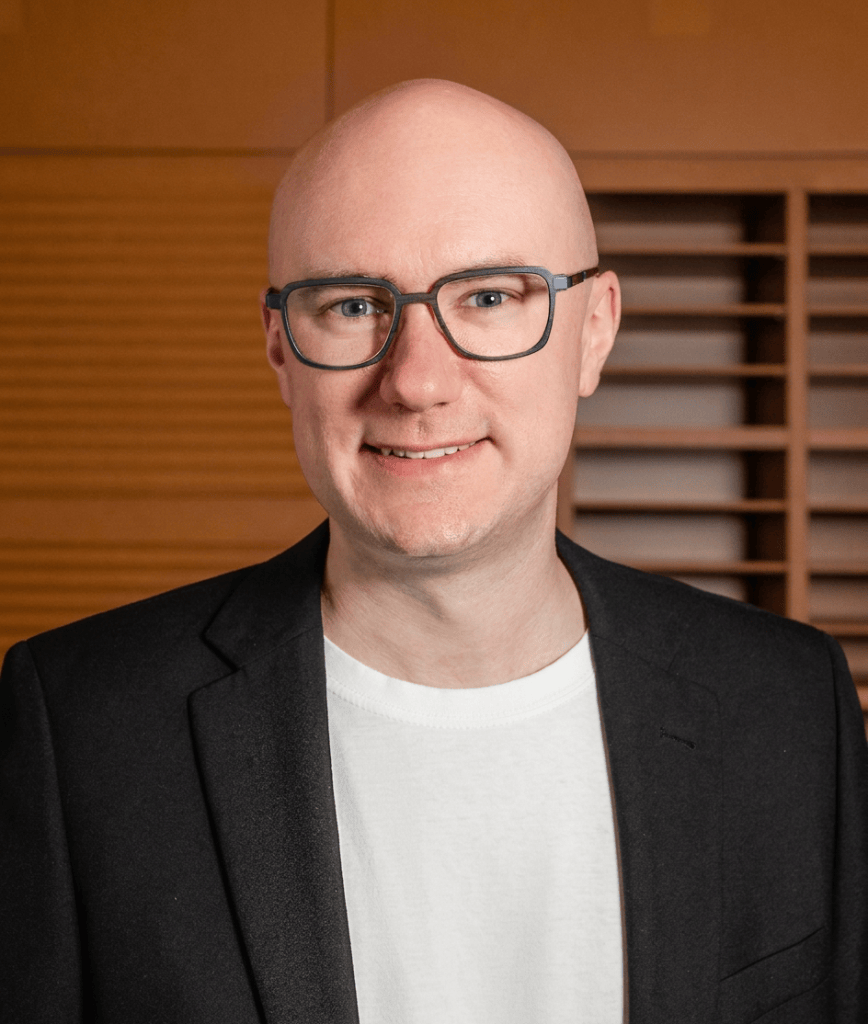
I am a postdoctoral researcher (computational scientist) at the Max Planck Institute for the Structure and Dynamics of Matter in Hamburg, where I work on the EU-funded MaMMoS project.
My interests are in
- computational neutron scattering and multiscale magnetism
- scientific software development
- analytical and numerical micromagnetics
- atomistic spin dynamics
- magnetic neutron scattering
- nanomagnetism and magnetic nanoparticles
- inverse problems and identifiability
- model discrimination and simulation-informed model reduction
My research in two sentences
“My research asks what can be reliably inferred about complex magnetization structures from neutron-scattering data, and under which assumptions. To address this question, I combine analytical theory, numerical simulation, and scientific software development.”
Alongside my computational research, I have participated in two neutron-scattering beamtimes at the Institut Laue–Langevin (ILL) and one at the ISIS Neutron and Muon Source. My role was primarily theoretical, supporting data reduction, MuMag2022-based analysis, micromagnetic modelling, and the physical interpretation of the measured scattering data. This work contributed to arXiv:2606.18791 (2026), Phys. Rev. Lett. 135, 196706 (2025), Phys. Rev. B 110, 054437 (2024), and Phys. Rev. B 108, 094434 (2023).
I am currently contributing to further beamtime proposals in collaboration with the Michels group at the University of Luxembourg and Prof Luis Fernández Barquín, Director of the CITIMAC Department at the Faculty of Sciences, University of Cantabria.
My theoretical work focuses on reducing complex magnetization fields to analytically tractable and physically interpretable representations. This includes perturbative and Green-function treatments of surface-induced spin disorder (J. Appl. Cryst. 55, 1475–1487 (2022); Phys. Scr. 98, 105512 (2023)), as well as reduced polynomial and vortex representations connecting nonuniform magnetization textures to neutron-scattering observables (Phys. Rev. B 109, 024429 (2024); Phys. Rev. B 110, 014420 (2024)).
More recent work develops simulation-informed minimal models, symmetry-resolved classifications, and reduced descriptors for vortex states (Phys. Rev. B 113, 224406 (2026); Phys. Rev. Research 8, 023328 (2026); arXiv:2608.16720 (2026)). Together, these approaches connect assumptions about magnetization structure to observable scattering signatures and provide a basis for model reduction and identifiability analysis. A three-month research stay with Prof. Elizabeth Blackburn’s group at Lund University and as a guest researcher at Lund Institute of Advanced Neutron and X-Ray Science (LINXS) provided an international setting for scientific exchange around these lines of work and strengthened my connections within Lund’s neutron-scattering community.
I am the main developer of NuMagSANS, a GPU-accelerated software package for simulating nuclear and magnetic SANS observables (J. Appl. Cryst. 59, 943–959 (2026)).
I developed MuMag2022, a software tool for analyzing magnetic-field-dependent unpolarized SANS data (J. Appl. Cryst. 55, 1055–1062 (2022)). During my research stay with Prof. Andrew Boothroyd at the University of Oxford and associated visits to the ISIS Neutron and Muon Source, I contributed to integrating the underlying methodology into the MuMag tool in SasView.
As part of my current position at MPSD, I contribute to the development of MaMMoS, an open framework for reproducible multiscale modelling of magnetic materials (IEEE Trans. Magn. (2026)).

